The Foundation Reports: Employment and mental health inequality

Introduction
The evidence is clear: improving the working lives of people across the UK is not optional. It is critical for protecting the nation’s mental health.
When work is supportive, meaningful and mentally healthy, it can play a powerful role in promoting resilience and improving quality of life.
However, for a rapidly growing number of people in the UK, work is becoming a source of poor mental health – and this burden is not experienced equally. Young people, people with a disability or long-term health condition and lone parents are among those most affected by work that harms their wellbeing.
The number of workers in the UK with poor mental health has grown by 66% since 2009
In The Foundation Reports: Tackling mental health inequalities in the UK (2025), a panel of public mental health experts found that employment is one of the strongest drivers of mental health inequality in the UK today.1 This year, the Mental Health Foundation set Improving working lives as one of our strategic goals, recognising that workplaces have a central role to play in preventing poor mental health.2
To understand what needs to change, we analysed data from Understanding Society, the largest study of its kind, which tracked 40,000 households over the past 15 years. We explored the unequal experiences of population groups at risk of workforce exclusion and poor mental health and examined differences between the four UK nations. We also listened directly to people with lived experience and to workplace leaders, building a picture of what inclusive, mentally healthy work should look like.
The evidence presented in this report underscores the urgency of action to make sure work supports good mental health for all. It sets out clear, practical recommendations for policymakers and employers, recognising that if work can contribute to poor mental health, it must also be part of the solution. Implementing these changes will help prevent poor mental health and protect the wellbeing and economic prospects of generations to come.
Work and mental health can support or undermine each other.
At the population level, work is a protective factor for mental health. People in work have better mental health than average, while those who are unemployed3 have far worse mental health.
Growing evidence supports a causal relationship between employment and mental health.4 Poor mental health makes it much harder to get and stay in work, and mental health problems can arise from insecure, poorly paid work. Workplace bullying, unmanageable workloads, under-resourced workplaces and poor work/life balance are all risk factors for poor mental health.
Supportive and secure work with fair pay can boost self-confidence, financial independence, personal growth and social connection
Mental health
Unstable, unsupportive and poorly paid work can lead to stress, burnout, and financial insecurity
People with good mental health may find it easier to thrive in the workplace
Employment
People with poor mental health may struggle to find or keep a job
The long-term implications for the UK economy are profound. As poor mental health becomes more widespread across the workforce, the country risks becoming trapped in a vicious cycle in which declining wellbeing pushes more people out of work. Left unchecked, this risks deepening socioeconomic inequalities, weakening economic growth and resilience, and increasing pressures on the welfare system.
Poor mental health at work is on the rise.
More than one in five workers (22%) are experiencing poor mental health. This is the highest level recorded since the data series began in 2009.
Around 7.2 million workers now have poor mental health, an increase of 2.9 million over the past 15 years.
Workforce mental health has worsened over time
According to data from the Health and Safety Executive, mental health conditions account for over half of all work-related ill health, and the longest period of absence from work compared to other conditions. In 2024/25, depression, anxiety and work-related stress led to over 22 million working days lost.5
Behind this trend is deeper changes in the world of work. Job-related distress is rising, as one in six workers (17%) now say their job is causing almost constant stress and unhappiness. Perhaps most concerning is that this marks a reversal of earlier progress. Improvements in work-related wellbeing have been undone, and the direction of travel is clear: things are getting worse, and they are doing so quickly.
Increasingly, work does not guarantee financial security.
More people are struggling to make ends meet following the economic shock of the pandemic, years of austerity leading to a decline in public services and rising costs of housing, food and fuel.
The impact of the cost-of-living crisis has been especially stark. Between 2021 and 2023, the proportion of workers facing financial hardship surged to more than one in ten (11%). This is double the rate recorded in 2014/2015.
Financial security is one of the strongest determinants of mental health and a major driver of widening mental health inequality throughout the UK.6 Coupled with the rising number of working people facing financial hardship, improving pay and tackling affordability pressures are likely to be among the most effective levers to improve mental health across the workforce.
Workforce financial hardship spiked during the cost-of-living crisis
Each nation tells a different story.
Work and mental health do not look the same across the UK. England, Scotland, Wales and Northern Ireland each has its own labour market, policy landscape and workforce pressures, shaping how poor mental health emerges and what kinds of responses will be most effective.
To explore these distinct trends in more detail and read our policy recommendations, download our nation-specific short reports from The Foundation Reports website.
Workforce mental health trends diverge across the four nations
Wales
Workers experience the worst outcomes across all measures, including the highest levels of poor mental health, job-related stress, income dissatisfaction and financial hardship. Workforce mental health has deteriorated more rapidly than the rest of the UK.
Northern Ireland
Historically strong workforce mental health has recently worsened significantly, bringing levels closer to the UK average. Financial and job-related wellbeing have deteriorated in recent years, but remain slightly better than the rest of the UK.
Scotland
Workers fare comparatively well. Job-related wellbeing, income satisfaction and overall mental health are better than the UK average, and fewer workers are financially struggling. However, mental health and financial wellbeing have deteriorated in recent years.
England
Outcomes sit mid-range – worse than those in Scotland and Northern Ireland, but better than those in Wales. All measures have deteriorated dramatically in recent years.
Good work is not distributed equally.
Structural and economic disadvantage are becoming entrenched in the workplace, leading to widening mental health inequalities for already vulnerable groups.
We identified three groups that are at particularly high risk of workforce exclusion, stigma and discrimination within the workplace and poor mental health outcomes:
- People with a disability or long-term health condition (LTC), who frequently encounter barriers to fair employment and inadequate workplace support.
- Lone parents, who face compounded pressures from caregiving responsibilities, financial strain and limited access to flexible, secure work.
- Young people (aged 16–24), who are more likely to experience insecure and low-paying work, and show rising levels of economic inactivity due to poor mental health.
To understand the real-world factors behind the data, we interviewed adults living with disabilities or long-term health conditions and those who have lone parenting responsibilities. We also held a roundtable discussion with 19- to 23-year-olds. Their perspectives highlight the interconnected factors shaping work-related mental health.
Across groups, workplace stigma damages mental health. The lack of supportive employment options also traps many in work that undermines their wellbeing.
Over the past 15 years, poor mental health has risen throughout the whole workforce. The rise has been steeper for young people and those with a disability or long-term health condition, which has widened inequalities in the workplace.
Working lone parents have followed a unique trend as their mental health improved significantly after the pandemic, when flexible and hybrid working became more common.
Workforce mental health inequalities
Working people with a disability or long-term health condition
An estimated 5.5 million disabled people and 3.9 million people with a work-limiting health condition are currently employed in the UK.7,8 Our analyses found these workers are 1.5 times more likely to experience poor mental health than the wider workforce, and the size of the mental health gap has nearly doubled over the past 15 years. Workers with a disability or long-term health condition are also significantly more likely to face financial hardship, report dissatisfaction with their income and experience job-related distress.
Across our conversations, we heard that both health status and disability shape working lives and are, in turn, shaped by experiences at work. Stigma and discrimination leave many people feeling unsafe to disclose their disability or long-term health condition at work, preventing access to reasonable adjustments and increasing pressure to overperform. When workplaces lack flexibility and understanding, work can become unsustainable, limiting career opportunities and damaging both physical and mental health. Flexible working arrangements, including working from home, were among the most important enablers of good mental health, but it was often difficult to find jobs with these features.
These accounts make clear that, far too often, employees with a disability or long-term health condition are met with workplaces that are unwilling to meet their needs. In this context, the higher rates of poor mental health experienced by this group are not inevitable. They are the predictable consequence of inaccessible and unsupportive working environments.
I had three months off earlier in the year because things got very difficult, and I didn't feel that [work] was very supportive… I think with more support earlier… I may not even have gone off sick, or I may have gone off sick for a much shorter time.
52-year-old autistic woman
Working lone parents
Lone parent families account for around 3.2 million households in the UK, with 83.3% headed by women, highlighting that policies affecting lone parents are also a matter of gender equality in employment and mental health.9 Employment rates are lower than for partnered parents (66% vs. 86%), reflecting the structural barriers lone parents face in balancing employment with caring responsibilities.10
Our analyses found that, historically, working lone parents had significantly worse mental health than the workforce average. However, the gap has narrowed in recent years. This may partly reflect increased access to flexible and hybrid working after the pandemic, which has helped some lone parents better manage competing demands.
However, financial strain remains a defining challenge. Our analyses found one quarter of working lone parents are facing financial hardship – double the rate seen in the overall workforce – and two thirds are dissatisfied with their income. These economic pressures are closely linked to mental health and can have intergenerational consequences, shaping the wellbeing and socio-economic outcomes for both parents and their children.11 Supporting the working lives of lone parents is therefore a clear opportunity for prevention, as improving employment conditions can help protect the wellbeing of generations to come.
The lone parents we spoke with discussed the challenges of balancing work with caregiving responsibilities, often alongside significant financial pressures and limited support. Workplace stigma and discrimination were common experiences, as they created pressure to prove themselves as committed employees and counter negative stereotypes. High childcare costs and limited suitable provision left many parents struggling to make work feasible. For the lone parents we spoke with, flexible working arrangements were not simply a workplace benefit; they were essential to sustaining both work and wellbeing.
The strain these experiences place on mental health should not be viewed as an inevitable feature of lone parenthood. They are the result of structural barriers that make combining work and care unnecessarily difficult; barriers which can be removed when decision-makers take action.
Juggling the demands of parenting on my own while trying to meet professional expectations has often felt like walking a tightrope. There’s constant pressure to "perform" at work while also being fully present at home, and the two can clash in ways that are emotionally and physically exhausting.
35-year-old woman, lone parent with ADHD
Working young people
According to Office for National Statistics (ONS) data, 52.2% of young people (aged 16–24) are currently employed.12 Our analyses show young workers are significantly more likely to experience poor mental health than the workforce average, and since 2018 their wellbeing has declined more sharply than that of older colleagues. Young people in work are also slightly more likely to face financial hardship, feel dissatisfied with their income and feel distressed because of their job than their older colleagues.
This widening gap reflects growing age-related inequalities in workplace experience. The young people we spoke with felt that their generation is facing an especially challenging labour market with fewer job opportunities, worse working conditions and greater financial strain. They felt unprepared for the transition to the workplace and found it hard to juggle work alongside education. And once in work, they found stigma and loneliness damaging to their mental health.
Their perceptions are backed up by real-world data. Entry-level jobs are being replaced by automation and Artificial Intelligence (AI), and insecure zero-hours contracts are on the rise, especially among young workers.13, 14 The rising cost-of-living has contributed to record-high numbers of young adults living with their parents and students working alongside their studies.15, 16
These systemic factors are placing an undue burden on the mental health of young workers. Helping more young people into work is only part of the challenge. We must ensure that they are met with workplaces that support them to develop, thrive and feel optimistic about their future.
Most places around me won't do higher than minimum wage… that feeds into mental health in a way, because sometimes it feels like, what's the point? If you're getting like £10 an hour, sometimes it just feels like, what am I doing all this for? Because at the end of the day, £10 doesn't get you much anymore.
Young Leader
What does mentally healthy work look like?
Creating mentally healthy and inclusive workplaces benefits everyone. When people are supported to thrive at work, they enjoy a better quality of life and are more likely to remain in employment.
The positive effects ripple outward through families and communities, while also helping employers retain staff and build productive organisations.
In turn, higher levels of workforce participation contribute to a stronger economy as fewer people are forced out of work by preventable mental health challenges.
Based on our research, a mentally healthy workplace…
- Provides stable, secure and fairly paid employment
- Prevents stigma and discrimination
- Adapts flexibly to meet individual needs
- Enables employees to be themselves at work
- Recognises responsibilities and identities beyond work
- Provides equal opportunities for development and progression
- Creates a sense of being valued and belonging to a workplace community
- Supports open conversations about challenges and access to support in a psychologically safe environment
Economic inactivity is a mental health risk factor. But it doesn’t have to be.
People who are not working and not actively seeking work face far higher rates of poor mental health and financial hardship than those in employment. These outcomes are the result of structural barriers to wellbeing, including a complex benefits system which often falls short of providing the financial support needed for a decent quality of life.
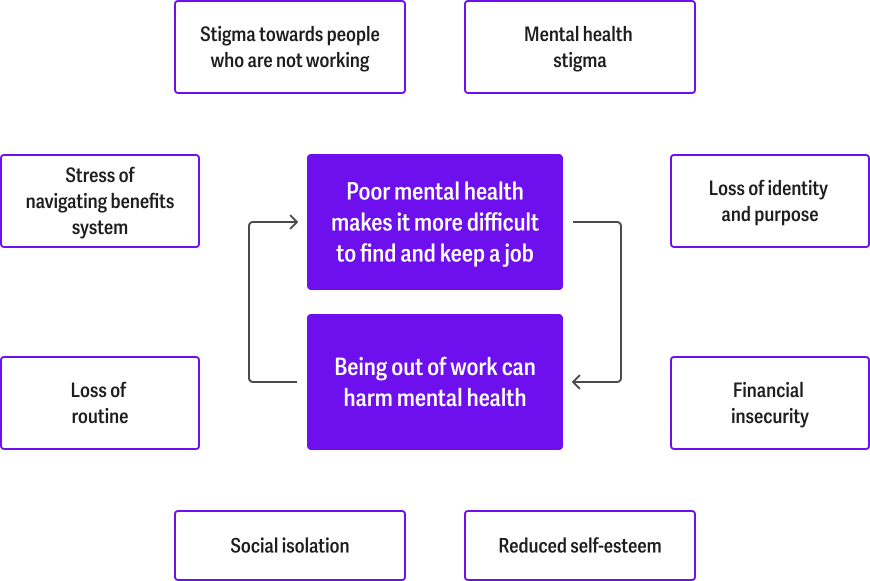
However, our conversations with people unable to work due to sickness, disability or caring responsibilities revealed a more nuanced picture. Poor mental health is not an inevitable consequence of being out of work. Those who were financially stable – because they could rely on a partner's income, family support or savings from when they were working – described the experience as restorative. It enabled them to look after their mental and physical health, spend more time with their children and reflect on their goals and priorities. Yet these benefits are far from universal. Without financial security the opportunity to rest and reconnect simply isn’t possible for most people.
Not having a job right now has made me reflect deeply on how much of my identity was wrapped up in work. There's space now to rediscover who I am outside of deadlines and job titles.
35-year-old woman, lone parent with ADHD
Workforce exclusion and wellbeing are shaped by preventable inequalities.
Too often, workforce exclusion stems from avoidable barriers to good-quality employment, including discrimination and inflexible, inaccessible workplaces.
Drawing on national data and lived experience, we explore the factors that influence the wellbeing and employment opportunities of people who are out of the workforce.
I do want to work, and I want to show my children that going out to work is important. So I have bad feelings. Shameful, angry sometimes that I’m left with these conditions and it stops me from working. Quite a lot of feelings that I’m not too great.
28-year-old woman, lone parent living with mental health conditions and ADHD
Economic inactivity is linked to poor mental health
Financial hardship is common among those out of work
Out of work due to disability or sickness
In 2025, the disability employment rate stood at 52.8%, compared with 82.5% for non-disabled people.17 More than 2.5 million people are currently out of the labour market due to long-term sickness – 400,000 more than before the pandemic.18
Our analysis shows that people who are out of the labour market because of disability or sickness experience much poorer outcomes than their employed counterparts. They are around 1.7 times more likely to report poor mental health, and over twice as likely to experience financial hardship as people with a disability or long-term health condition who are working.
We heard that stigma, financial insecurity and the demands of navigating the benefits system can make it difficult to maintain good mental health while out of work. Many felt judged for not working, despite their health making employment impossible. Stigmatising interactions with welfare services, friends and family often reinforced feelings of shame and low self-confidence at a time when support was most needed.
I wouldn't have been able to find a job with the disabilities I have. Who would employ me?
60-year-old woman, living with disabilities
Moreover, the impact of disability and long-term health conditions often extends beyond the individual, affecting the employment and financial security of family members who provide care. One participant shared that his wife was made redundant while taking leave to support his recovery from a disabling brain injury because her employer was unwilling to accommodate an extended period away from work. The loss of her job compounded the family's stress, leaving them without an income during an extremely vulnerable period.
We ended up going to various food banks or going to Tesco looking for the yellow sticker stuff. You know, going out of hours where people wouldn't recognise who we are.
56-year-old man, living with a disability
The experiences shared here demonstrate that poor mental health and workforce exclusion are often shaped by preventable barriers. Financial insecurity and stigma are the results of systems and structures that can be changed. With meaningful action from employers and policymakers, these inequalities can begin to shift.
Non-working lone parents
Around one in three lone mothers (35%) and one in four lone fathers (24%) are not in work.19 And employment rates remain lower than for partnered parents (66% compared with 86%).20 These disparities reflect the structural barriers lone parents face in balancing employment with caring responsibilities.
The Understanding Society dataset does not include a large enough sample of non-working lone parents to calculate population estimates for this group. However, wider evidence shows that economically inactive lone parents experience worse mental health outcomes than those who are working, and lone mothers are at particularly high risk of depression.21
In our research, the high cost of childcare, which has risen faster than inflation for decades22, was consistently identified as the biggest barrier to employment for lone parents. A lack of flexible, secure jobs also left many feeling locked out of employment despite wanting to work.
Alongside these practical challenges, we heard about the emotional toll of stigma and isolation. Participants felt judged both for being out of work and for being a lone parent, with younger parents facing additional stigma because of their age. Being outside the workforce could also limit opportunities for social connection, contributing to loneliness.
Poor mental health and being out of work can create a cycle that is hard to break, leading to long-term financial and social disadvantage. The consequences can extend across generations, affecting children’s future mental health and economic prospects23, making early support for lone-parent wellbeing a critical investment in prevention.
[Childcare costs are] literally encouraging you not to work... you're just working to pay to watch people have your child… What is the point?
22-year-old woman, lone parent
Young people not earning or learning
We’ve used the term ‘not earning or learning’ to describe young people who are not in education, employment or training (NEET). While the term 'NEET' is widely used, it is a politicised label which can contribute to stigma.24
An estimated 12.7% of young people aged 16–24 (around 946,000 individuals) are not earning or learning.25 As highlighted by the Milburn Review into Young People and Work, the proportion of young people out of work due to mental ill health has doubled in the past decade.26
Our analysis echoes this trend. Levels of poor mental health have risen significantly, as four in ten young people who are not earning or learning are now experiencing poor mental health. The wellbeing gap with their peers in work has widened substantially in the past decade, as the mental health of young people who are not earning or learning has deteriorated more quickly. They are also twice as likely to experience financial hardship, creating a cycle where poor mental health and financial difficulties can make each other worse over time.
We heard that stigma was one of the most pressing issues impacting the mental health of young people who were not earning or learning. The young people we spoke with emphasised the damaging impact of having their mental health concerns dismissed, minimised and labelled as ‘laziness’.
As our research shows, it’s undeniable that poor mental health is rising among young people, both within the workforce and among those who are not earning or learning. Tackling mental health stigma and challenging harmful narratives about young people who are unable to work due to mental health difficulties is therefore more important than ever. Doing so is essential to prevent experiences of stigma from further damaging young people’s mental health and creating additional barriers to workforce participation.
I think there's a really big stigma around Gen Z being really lazy, or not wanting to work, or having too many mental health problems and therefore are a real burden on the system in a way. And I think that also puts pressure not only on the young people, but then also it creates quite an unhealthy and toxic work environment.
Young Leader
Everyone deserves good mental health.
It is important to recognise that employment will not be an appropriate goal for everyone who is economically inactive. For some, health, disability, caring responsibilities or other personal circumstances mean that returning to work is neither feasible nor appropriate.
Improving wellbeing among people who are out of work can help prevent a cycle in which poor mental health creates further barriers to employment. However, the case for supporting this population extends beyond workforce participation.
Regardless of whether someone is able to work, everyone deserves good mental health.
Learning from experience: Recommendations for employers
Mentally healthy workplaces benefit both employers and employees.
We spoke with workplace leaders who are taking action to support workforce mental health. This group reflects a wide range of contexts and experiences – from a 6,000‑employee local council to a four‑person community interest company – and includes leaders from universities, charities, local government and private businesses across the UK.
Each workplace leader interview has been developed into a short case study, which can be accessed here.
Financial security is one of the most powerful determinants of mental health, and low income is a key driver of mental health inequality.27
Improving pay is therefore one of the most effective levers for strengthening mental health at work.
Drawing on conversations with workplace leaders and people living with a disability or long-term health condition, lone parents and young people, our research points to clear steps employers can take to build more inclusive workplaces that support mental health and wellbeing:
- Pay wages that reflect the true cost of living and address in-work poverty, backed by strong job security and protections against exploitation and discrimination.
- Offer flexible hours, hybrid working, part-time roles and job shares, and promote healthy work-life balance through options like a 32-hour or four-day week.
- Adopt inclusive and accessible recruitment practices, and offer tailored, phased return to work plans after absence, whether due to illness, disability, or having a child.
- Build a clear, evidence-based wellbeing strategy that shapes how commitments are implemented, monitored and improved over time, and empower staff to help shape the strategy.
- Build a psychologically safe, anti-discriminatory culture. This should challenge stigma, embed mental health into everyday workplace dialogue and develop workforce skills in inclusive practice for disability, mental health, and parents.
- Equip line managers and make mental health support genuinely accessible, so staff have both a trusted person to turn to and practical resources available when they need them.
Recommendations to support people with a disability or long-term health condition:
- Proactively offer workplace supports and adjustments that tailor support to individual needs.
- Provide a private space to take breaks during the workday.
- Strengthen support for employees with caring responsibilities.
Recommendations to support lone parents:
- Offer job sharing and part-time roles which accommodate parenting responsibilities and childcare needs.
- Offer tailored return to work plans for new parents.
- Adopt inclusive hiring practices for parents returning to the workforce.
Recommendations to support young people:
- Prepare young people for workplace realities through mentoring and employer-led initiatives.
- Provide opportunities for peer support and connection at work.
Call to action: Recommendations for policymakers
Give them a secure contract. Increase parental leave. Make sick leave more generous. Those hard elements around job security and leave entitlement, benefits entitlement and absence entitlement, are really fundamental, and that is why we support this Employment Rights Bill.
Mark Rowland (Mental Health Foundation, CEO)
Many of the changes needed to create good work that supports mental health are devolved to governments across the UK. Recommendations for Northern Ireland, Scotland and Wales are set out in the country-specific reports available on The Foundation Reports website.
However, there are important actions that the UK Government can take. The following recommendations focus on changes that have the potential to improve mental health and access to good work across the whole UK.
The UK Government should:
- Reform fit notes to support work, not trigger absence, including increasing usage of 'may be fit' advice. The Get Britain Working recommendation to ensure employers collaboratively develop stay at work plans and return to work plans should be adopted.
- Incentivise employers to focus on prevention and early intervention, for example, by increasing the length of statutory sick pay from 28 weeks to 40 weeks. There should be regular comprehensive reviews of the policy, with at least one review during this parliamentary term in addition to the annual uprating of the Statutory Sick Pay weekly rate.
- Place employers and line managers at the centre of response by prioritising evidence-based, low-cost and scalable training for line managers. Encouraging more regular check-ins for non-office roles should also be considered.
- Treat flexibility, autonomy and job control as core mental health infrastructure, building on the reforms of the Employment Rights Act 2025 and recognising that work design is a crucial preventative tool.
- Reduce stigma and take a non-adversarial approach to support to ensure workplaces become trauma-informed and stigma is treated as a structural problem. Workplaces could build on the definition set out by the United States SAMHSA (Substance Abuse and Mental Health Services Administration).
- Avoid additional employer burdens by stress testing any additional reforms for unintended impacts on employer capacity.
- Review fiscal and income policies to ensure that people on low and middle incomes can retain sufficient income to meet essential living costs and maintain financial wellbeing.
- Strengthen the policy, benefits and employment support framework to ensure work provides a sufficient, secure and reliable income, particularly for low and middle-income households.
- Use public procurement, incentives and fair pay standards to encourage employers to provide good quality work with fair wages, predictable hours and workplace practices that support financial wellbeing.
- Invest in measures that reduce financial pressures on households, including support with housing, childcare, transport and other essential living costs that can impact mental health and wellbeing.
- Strengthen data and evidence on workplace mental health via the Workplace Health Intelligence Unit recommended by Get Britain Working.
- Regularly update the National Minimum Wage at least every six months to genuinely reflect the cost of living. All publicly funded organisations should pay the Living Wage.
- Strengthen coordination between the UK Government and devolved governments, focusing on shared responsibilities for devolved health, skills and employability services.
- Enforce measures in the Employment Act 2025 to ensure the restrictions on zero-hours contracts and guaranteed income are enforced. Regularly assess the remit of the Fair Work Agency and provide additional powers where required.
References
- Jowett S, Lutz N, Crepaz-Keay D. Tackling mental health inequalities in the UK: expert consensus on priority areas. Mental Health Foundation. November 2025. Accessed August 13, 2026. https://www.mentalhealth.org.uk/sites/default/files/2025-11/MHF_TFR_Tackling_mental_health_delphi_study_report_0.pdf
- A CALL TO ACT: Fighting for prevention in mental health. Mental Health Foundation. Accessed August 13, 2026. https://www.mentalhealth.org.uk/sites/default/files/2026-06/MHF_Strategy_2026-2031.pdf
- ‘Unemployed’ refers to people who do not have a job, but are actively seeking work and available to start work.
- Bruggeman H, Héroufosse J, Van der Heyden J, Smith P. The relationship between mental health and employment: a systematic review of cohort studies. European Journal of Public Health. 2024;34(Suppl 3):ckae144.1106. doi: 10.1093/eurpub/ckae144.1106
- Working days lost in Great Britain. Health and Safety Executive. Accessed August 13, 2026. https://www.hse.gov.uk/statistics/dayslost.htm#:~:text=Stress%2C%20depression%20or%20anxiety%20and,around%2016.4%20days%20off%20work
- Lutz N, Berrington W, Lejac B, et al. The Foundation Reports: The state of mental health inequality in the UK. Mental Health Foundation. June, 2026. Accessed August 13, 2026. https://reports.mentalhealth.org.uk/foundation-reports/report/
- The employment of disabled people 2025. Department for Work and Pensions. Accessed August 13, 2026. https://www.gov.uk/government/statistics/the-employment-of-disabled-people-2025/the-employment-of-disabled-people-2025
- Health conditions among working-age people. Health Foundation. September 16, 2024. Accessed August 13, 2026. https://www.health.org.uk/evidence-hub/work/health-conditions-among-working-age-people
- Families and households in the UK. Office for National Statistics. 2021. Accessed August 13, 2026. https://www.ons.gov.uk/peoplepopulationandcommunity/birthsdeathsandmarriages/families/bulletins/familiesandhouseholds/2024
- Employment rate of parents living with dependent children by family type and age of the youngest child in the UK. Office for National Statistics. June 03, 2026. Accessed August 13, 2026. https://www.ons.gov.uk/employmentandlabourmarket/peopleinwork/employmentandemployeetypes/datasets/employmentrateofparentslivingwithdependentchildrenbyfamilytypeandageoftheyoungestchildtabler
- Poverty of Ambition: Why we need bold action to tackle poverty and improve mental health. Mental Health Foundation. June, 2025. Accessed August 13, 2026. https://www.mentalhealth.org.uk/sites/default/files/2025-06/MHF%20Poverty%20and%20Health%20Report%20-%20FINAL.pdf
- Francis-Devine B, Powell AB, Zaidi K. Youth unemployment statistics. UK Parliament. July 21, 2026. Accessed August 13, 2026. https://commonslibrary.parliament.uk/research-briefings/sn05871/#:~:text=there%20were%203.89%20million%20young,fewer%20than%20the%20previous%20year
- Taylor B. How AI Is Affecting Entry-Level Jobs in the UK. Great Place To Work. January 30, 2026. Accessed August 13, 2026. https://www.greatplacetowork.co.uk/resources/how-ai-is-affecting-entry-level-jobs-in-the-uk
- Zero-hour contracts reach new record high as workers wait for new rights to arrive. Work Foundation. February 24, 2026. Accessed August 13, 2026. https://www.lancaster.ac.uk/work-foundation/news/zero-hour-contracts-reach-new-record-high-as-workers-wait-for-new-rights-to-arrive
- Families and households in the UK. Office for National Statistics. 2021. Accessed August 13, 2026. https://www.ons.gov.uk/peoplepopulationandcommunity/birthsdeathsandmarriages/families/bulletins/familiesandhouseholds/2024
- Student Academic Experience Survey 2026. Higher Education Policy Institute. Accessed August 13, 2026. https://www.hepi.ac.uk/reports/the-student-academic-experience-survey-2026/
- The employment of disabled people 2025. Department for Work and Pensions. Accessed August 13, 2026. https://www.gov.uk/government/statistics/the-employment-of-disabled-people-2025/the-employment-of-disabled-people-2025
- Rising ill-health and economic inactivity because of long-term sickness, UK: 2019 to 2023. Office for National Statistics. Accessed August 13, 2026. https://www.ons.gov.uk/employmentandlabourmarket/peoplenotinwork/economicinactivity/articles/risingillhealthandeconomicinactivitybecauseoflongtermsicknessuk/2019to2023
- Employment rate of parents living with dependent children by family type and age of the youngest child in the UK. Office for National Statistics. June 03, 2026. Accessed August 13, 2026. https://www.ons.gov.uk/employmentandlabourmarket/peopleinwork/employmentandemployeetypes/datasets/employmentrateofparentslivingwithdependentchildrenbyfamilytypeandageoftheyoungestchildtabler
- Ibid
- Harkness S, Skipp A. Lone mothers, work and depression. Nuffield Foundation. Accessed August 13, 2026. https://www.nuffieldfoundation.org/wp-content/uploads/2013/12/Lone-mothers-work-and-depression.pdf
- Hodges L, Shorto S, Knights-Toomer A, Jenkins F, Hutton T. Childcare Survey 2026. Coram Family and Childcare. Accessed August 13, 2026. https://www.coramfamilyandchildcare.org.uk/research/childcare-survey-2026/
- Breaking the cycle: The economic cost of poor parental mental health. May, 2022. Caring Together. Accessed August 13, 2026. https://www.caringtogether.org/wp-content/uploads/2022/05/Our-Time-Breaking-the-Cycle-the-economic-cost-of-poor-parental-mental-health-May-2022.pdf
- Levy J. Are We Stigmatising Young People? We need to talk about ‘NEET’. Youth Careers Collective. November, 2025. Accessed August 13, 2026. https://youthcareers.org.uk/wp-content/uploads/2025/11/We-need-to-talk-about-NEET-final-11Nov2025.pdf
- Young people not in education, employment or training (NEET), UK: November 2025. Office for National Statistics. Accessed August 13, 2026. https://www.ons.gov.uk/employmentandlabourmarket/peoplenotinwork/unemployment/bulletins/youngpeoplenotineducationemploymentortrainingneet/november2025
- Young people and work: interim report. Department for Work and Pensions. May 28, 2026. Accessed August 13, 2026. https://www.gov.uk/government/publications/young-people-and-work-interim-report
- Lutz N, Berrington W, Lejac B, et al. The Foundation Reports: The state of mental health inequality in the UK. Mental Health Foundation. June, 2026. Accessed August 13, 2026. https://reports.mentalhealth.org.uk/foundation-reports/report/
Case studies
Explore case studies that share practical examples from workplace leaders, showing how mental health can be championed in different workplace settings, and offering ideas that other organisations can learn from and adapt.